A startup can win its home market and still be uninvestable.
That sounds harsh. It is also the rule a 13-year-old venture firm is built on. Cenk Bayrakdar backs Turkish engineers, keeps their R&D at home, and then sends the founders to the US. The investor I just spent an hour with thinks a local champion is a nice business, not a venture business. And after listening to his reasoning, I think he is right, and not only about Turkey.
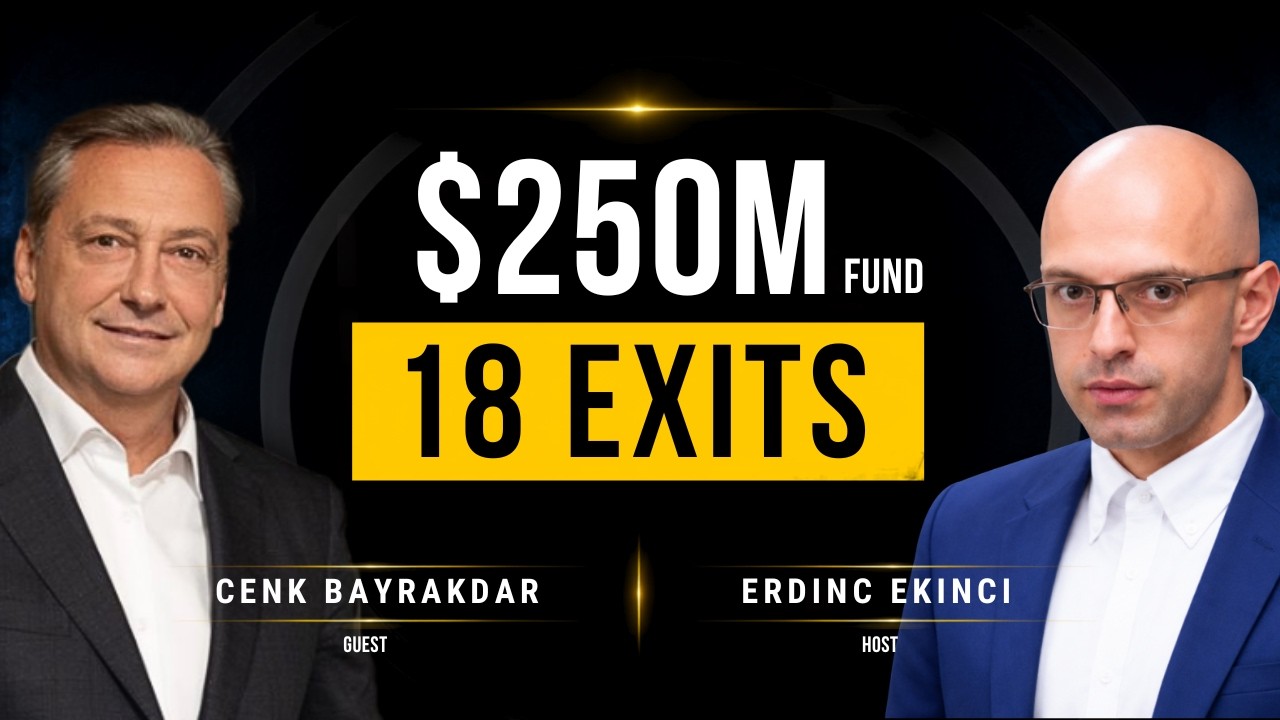
Cenk is the founding partner and managing director of Revo Capital. Before that, he ran products and IT at Turkcell, Turkey's largest telco, with around $1.8 billion in annual revenue under him. He started Revo in 2013 with $15 million from college friends. Today the firm has raised over $250 million across three funds, backed 51 startups and closed 18 exits.
So when he says a good local business is not enough, it is worth stopping to listen. Here is what I took away.
Watch the full conversation
Jump to a section:
- 0:00 Why startups need to become globally relevant
- 1:39 From product builder to venture capitalist
- 20:30 Why Revo builds for global exits
- 23:59 Revo's own AI for finding founders
- 27:21 What Revo provides beyond capital
- 31:00 How Revo works with 240 global VCs
- 32:25 Where Revo invests, and why SaaS must become AI native
- 41:05 What gives Turkish founders a global edge
- 43:51 Why founders must lead global expansion
- 48:33 What LPs should know about venture capital
A nice life is not a venture return.
When Revo started, Cenk had a hard time convincing Turkish founders to look beyond Turkey. The home market was big enough to be comfortable.
"You can do only Turkey products and it may be enough for you to have a nice life, but it's not venture great."
That is the trap. A company can pay its founder well for twenty years and never return a fund. Both are fine outcomes. Only one of them is what a VC is buying.
I see the same thing in Japan, from the other direction. It is the fourth largest economy in the world, and Tokyo's growth market lets companies list with around $10 million in revenue. So founders stay home, list early and never test themselves abroad. The door is so easy to walk through that nobody looks for a bigger one.
The exit price is set by where you sell.
Revo has done 18 exits and used investment bankers on only two of them. The lesson from those exits is simple.
"You need to bring the companies into a globally investable level. Otherwise, if you just do exits in your market, then the money you get for the exits are not that appealing."
So the playbook is fixed. Once Revo invests, marketing, sales, customer support and the founders move to the US, sometimes the UK or the EU. The R&D stays in Turkey or Eastern Europe.
It shows in the numbers. In Fund II, 15 of the 19 companies already have their headquarters outside Turkey.
Cenk put the logic in one line. Turkey is good for developing products, "but not for selling."
Hard currency is the only real hedge.
There is a second reason to sell abroad, and investors care about it even more than founders do.
"The most important part for emerging markets is the currency risk, and global sales is the only way to mitigate that."
In Fund II, 11 of the 19 companies already sell 100% of their product globally, in dollars or euros. When the lira moves, their revenue does not.
I had never framed going global as risk management. Most founders think of it as growth. For an investor in an emerging market, it is survival.
Hunger beats comfort.
I asked Cenk why Turkish founders adapt so well abroad. His answer was not flattering to Japan, and I think it is fair.
"Japan is a rich country. Turkey is not. So in Turkey there's more, let's say, hunger for success."
He has seen the opposite in Eastern Europe. Revo puts about 20% of its fund there, but the founders he backed were often reluctant to move to the US. They had high salaries and comfortable lives, even after giving up a good part of their company early. They were happy where they were.
This is the pattern I see across Japan, Korea and Taiwan. Deeply technical founders who can build anything, then freeze when it is time to sell, especially in another language. The product is global grade. The comfort zone is not.
Get in early, or get pushed out.
Revo is a Series A and B investor. Cheques of $2 to 5 million, and up to around $12 million per company with follow-ons.
But it kept losing deals the same way. The team would spend nine months building a relationship with a founder, waiting for Series A. Then a US or UK fund would arrive and take the whole round.
So in Fund III, 5% of the fund goes into seed: $250,000 cheques, about 15 deals, eight done already. The money is small. The point is the pro-rata right that comes with it.
"Just to have our foot in the door."
Finding those founders is not left to luck. Revo built its own AI system, connected to LinkedIn, GitHub and other sources. If a startup starts hiring fast or its web traffic jumps, Cenk gets an alert on his phone, even if he has never heard of the founder. When I asked whether it was open to the public, he laughed and said no. Fair enough.
Capital is the commodity. The founder's time is the gift.
Cenk calls himself a product guy, not a finance guy. You can see it in what Revo gives its companies:
- A full-time headhunting team that hands founders free shortlists for C-level hires
- A review of each company's digital marketing every three months
- AI that tracks global competitors and news, because founders are bad at watching competition outside their own market
- Ready-made partners for setting up in the US
That last one is the best idea in the conversation. Revo does not tell a founder to go and figure out America alone.
"You will work with this partner, with this law firm. It's going to cost you this much. It again takes 6 months, but not his 6 months."
That is the difference between advice and support. Advice costs the founder six months. Support costs the investor a phone call.
Your next investor is already in someone's CRM.
Revo keeps relationships with around 240 VCs, mostly in the US and UK. Every quarter or two, it presents its portfolio to them and tests their reactions to new deals.
So when a portfolio company raises, the founder does not start cold. Revo can tell them which 17 funds already showed interest and make the introductions.
"This is the most valuable [thing] that you can do to your portfolio."
That CRM also runs on AI. For every company, it shows which VCs might be interested and who the likely acquirers are.
SaaS is under attack. AI-native SaaS is not.
Revo's sectors come straight from Cenk's career. He says his Turkcell team built the first SIM-based mobile wallet in the world with BlackBerry, so fintech came first. The list today:
- Fintech, where Revo is the largest investor in Turkey
- AI-native SaaS
- Gaming and AI-enabled consumer apps
- Cybersecurity
- Digital health
- Energy, software only, focused on carbon footprint and efficiency
He was blunt about SaaS. The classic model is under attack from AI. What he backs now is SaaS built AI-native from day one.
The example he gave was Massive Bio. A US company on paper, with all of its R&D in Turkey, using AI to match cancer patients to clinical trials. It works with 15 of the top 20 cancer pharma companies. That is the Revo model in one company.
Five percent. Not more.
For investors, Cenk was just as plain.
- Money is called only when there is a deal, and returned as exits happen
- A commitment runs ten years, but the money is actually in for about four and a half on average
- Strategic exits can beat IPOs. A global buyer filling a gap in Turkey, MENA or Eastern Europe may pay more than the public market would
- If you like a manager, keep investing fund after fund. Each one gets better. Fund III is fully tax transparent for foreign investors and tax free for Turkish ones, something Revo did not know how to do in Fund I
And the rule that matters most: "In a fund you should invest probably 5% of your net worth, not more than that."
Some LPs get even more. Through side letters, Revo takes one of their people into its team four days a week to learn the job on Revo's own tools. Seven LPs have used it to start their own family offices. No wonder people who spend a year or two at Revo often leave to become partners at other funds.
The founder needs to go.
Of everything Cenk said, one line stayed with me most. Revo learned it by watching expansions fail.
"You cannot do geography expansion without the founder. Just with professionals, you cannot do it. The founder needs to go."
I have done cross-border sales in Japan for 15 years. I believe this completely. No country manager, agency or partner will sell your company the way you will in the market that matters most.
Hiring someone to go abroad for you is not a strategy. It is a delay.
Watch the full session
This is the short version. The full conversation runs just under an hour and ends with Cenk's open invitation to bring more of Revo's portfolio companies and investors to the Far East.
Watch the full episode on YouTube
Subscribe for more conversations with the founders, investors and operators building globally.
About Revo Capital: Founded in 2013 and based in Istanbul, with an office in the Netherlands. A Series A and B investor backing Turkish-rooted technology companies built for global markets, now investing from its third fund. Portfolio includes Midas and Massive Bio.
About Openfor.co: AI lets one person build like a whole company. But most people still work alone: no team, no mentors, no audience and no one holding them accountable. Openfor.co gives you all four for one monthly membership. AI agents do the work, mentors review it with you every week, our channels feature it, and a global community gives you people to sell to and build with. No equity taken. Everything you make is yours. openfor.co
This post is for education only and reflects the personal views of the speakers. It is not financial, legal or investment advice.