What a VC Who Hates Most VCs Knows That Founders Should Hear
Most VCs are not built to serve founders.
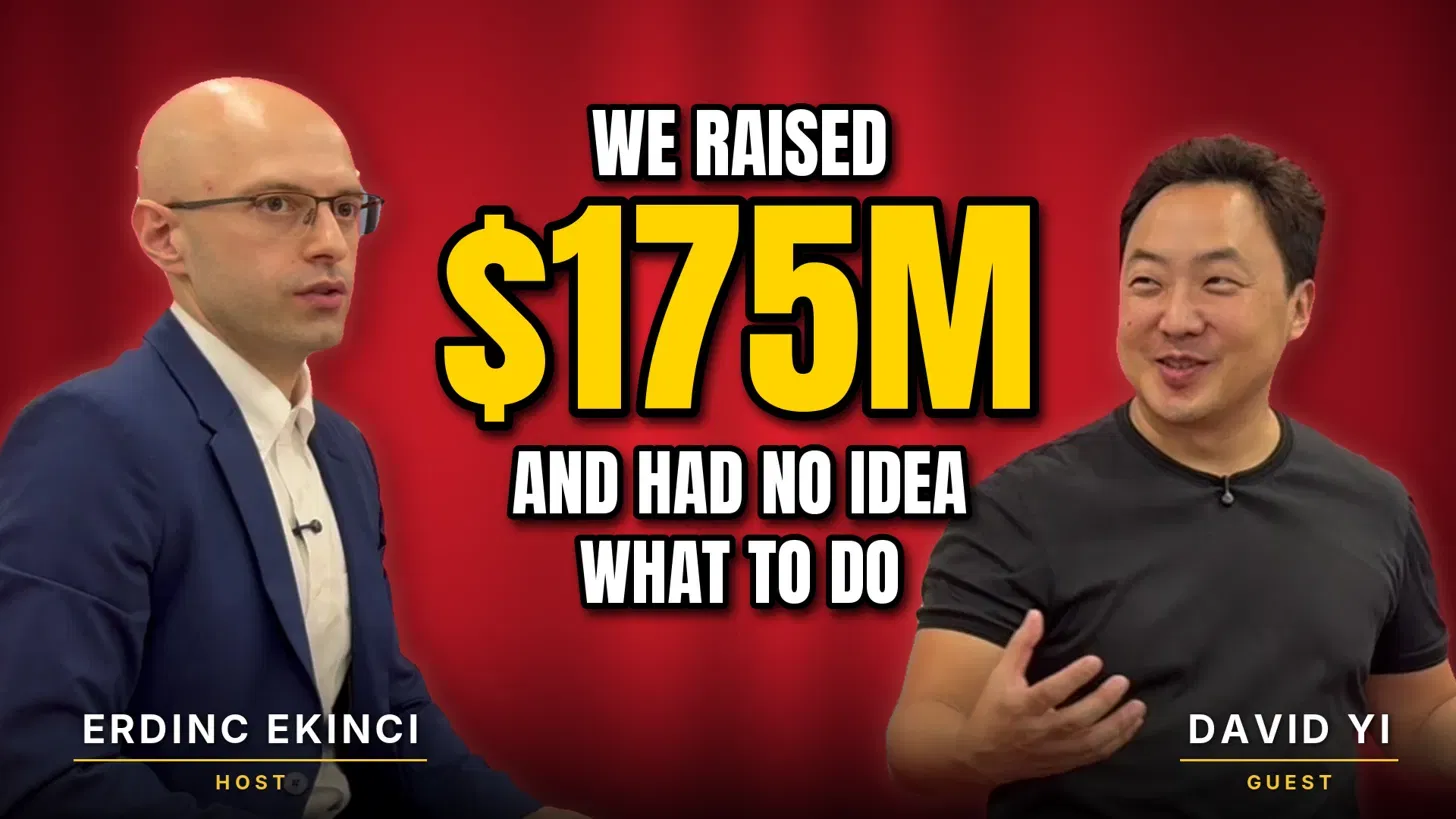
That is not my line. It comes from a VC. David Yi calls himself "the VC who hates most VCs", and after an hour on stage with him in Shibuya, I understand why he says it out loud.
David started as a lawyer and quit. He became a founder, mostly in education. His last company, an AI education company, raised $175M from SoftBank. Today he is General Partner at Ethos Fund, backing early stage founders across the US and Southeast Asia.
So when someone who has sat on both sides of the table says most of his own industry is getting it wrong, it is worth stopping to listen. Here is what I took away.
Watch the full conversation
Jump to a section:
00:0 0 Intro
01:03 The VC who hates most VCs
02:30 Zero to one
04:13 Why most VCs fall short
07:56 Silicon Valley vs Asia
10:18 Fuel or spark: what founders really need
13:10 Inside Ethos Fund
18:57 Where the deals come from
20:57 Building cross-border from Japan
25:06 Fund 2 and de-risking
27:33 Gift, talent, calling
30:29 VC is a service business
36:03 Live questions from the founders in the room
36:21 Cross-border fundraising and game theory
39:13 How to create FOMO and stay ethical
40:44 The $175M story
42:45 Pitch deck red flags
46:24 Fake term sheets and deal tension
48:09 Lead, follow, board seats
49:06 Wrap up00:00 Intro
Most, not all
The first thing David does is correct the label.
"Most doesn't mean all. There are VCs that I absolutely love and I admire greatly. But I do hate most VCs."
The second thing he does is tell you where it comes from. He did not start in finance. He started at 14, in a restaurant.
His mother immigrated from Korea to the United States, barely finished high school, and had to start businesses to support the family: chicken teriyaki, sushi, a sandwich shop. She did not speak much English. So her co-founder was her teenage son.
"I was her chief marketing officer initially, and her chief legal counsel, and at one point her chief operator."
That is where his view of founders comes from. He learned early "that anyone can do entrepreneurship if they really wanted." He has been on the founder's side of the table since before he knew there was a table.
Ask who the VC really works for
David's first reason is simple, and most founders never think about it.
A VC has at least two groups of people to keep happy: the founders they back, and the LPs whose money they invest. So he asks the room which one a VC cares about more.
"It's their money."
When it comes down to it, he says, VCs side with their LPs. It is not evil. It is just how the incentives work.
Then he adds a twist. LPs are not happy either. Family offices, pension funds and endowments do not put money into venture only for returns, because there are safer ways to make money. They do it to be part of innovation and to learn from founders. And in his view, most VCs fail at giving them that.
So the VC sits in the middle, and often serves neither side well.
I think every founder should understand this before their first pitch. Knowing whose money you are taking changes how you read every "we love it, let's stay in touch".
Silicon Valley's playbook does not travel
The second reason is the one that hit closest to home for me.
"VCs are very good at copycatting other VCs."
In Vietnam, Korea, Japan or Taiwan, David says, the default is to copy what Silicon Valley does. But nobody would give that advice to a founder.
"You would never tell a US founder who's entering Japan: do exactly what you did in America to succeed in Japan. It wouldn't work."
I have spent 15 years selling across borders in Japan. He is right. The product rarely fails because of the product. It fails because nobody adapted the way it is sold, explained and trusted.
David is not against the unicorn model. It works, he says, if that is honestly the VC you are. The problem is the VC who dangles a unicorn carrot in front of founders building something else: a business their country needs, that may never be the next Google, and that can still be a great company.
Some VCs, he says, are not betting on ten companies hoping one wins. They are betting on ten companies hoping all ten win, aiming for healthy 2x or 3x returns across the board.
The catch? "It requires a lot of work from the VC." Real due diligence. Getting to know the founder. Sharing a meal. Growing with them instead of wiring money and saying goodbye.
Fuel or spark is the wrong question
I put a common idea to him. Great founders are like refined fuel: give them a spark of capital and they go wild. Do they really need advice?
David did not accept the premise.
"It's like asking: should a teacher teach math just this one way?"
His point is that every founder has gaps, and so does every VC. The real question is whether the two sets of gaps fit together.
Marketing is his favourite example. A founder is building the product, raising money, inspiring the team and hiring people, often for equity instead of a real salary. When do they have time to market? That might be where a VC can help. Another founder might need help somewhere else entirely.
"It's a people problem. It's like me marrying my wife. It's just not a good match. But maybe there's another VC that can help you."
I like this framing because it takes the shame out of a rejection. Sometimes "no" just means wrong match.
Small cheques, then double down
Ethos Fund's first fund is small on purpose. It raised $12M, mostly from US LPs, and focused on the US and Vietnam. A typical cheque was around $250K. The fund has backed 26 companies in about four years.
The interesting part is what happens after the first cheque. Instead of holding big reserves, they keep backing their best companies again and again until Series A. With the most promising ones, they have doubled down three or four times.
Then he tells the story that explains why.
"When I raised $175M from SoftBank, you know what happened? I did not know what to do with that money. The entire company didn't know what to do with that much money."
His lesson from it is one of the best lines of the session:
"Sometimes you have to learn with a little bit of money to know what you need to do with the next money."
Founders are bad at guessing how much they need. A partner who keeps showing up, "even when other people don't believe you", is worth more than one big cheque.
Third culture is the edge
On Japan, David is optimistic. Japan is a very advanced economy that has been slow at startup innovation, and he believes the country now wants to move faster.
He also believes innovation and branding have flowed one way, from the West to Asia, for a long time, and that it is about to flip.
The engine, in his view, is what he calls third culture: people who carry one culture, live in another, and build a space of their own between them. He points out that in the US, a large share of unicorns are founded by immigrants.
"Every foreigner in Japan, you're gonna be innovative. You have to be, just by who you are."
He also describes four types of people that global companies need: the local lion who knows the home market, the cultural chameleon who is local but not only local, the passionate pilgrim who moved there and brings outside energy, and someone who connects the company to the big capital markets.
This is also how he manages risk. Ethos backs third culture founders. And he says something many founders here will not like:
"If I see a founder and they can't speak English, I don't invest in them."
He softens it straight away. If you do not speak English, have a co-founder who does. Or be teachable enough to learn and to hire a senior person who can pitch with you. That last option is hard, he admits, because "they have to kill their ego."
I see this constantly in our programs at Openfor.co and Founder Institute. Some of the most technical founders in Japan, Korea and Taiwan can build almost anything, then freeze when it is time to sell it in another language. It is not a talent problem. It is a translation problem, and it is fixable.
VC is a service business
This is the centre of everything David said.
"It's a service business. And that's why I hate most VCs. They don't get that."
He tested it on the room. Founders who had taken money from a VC felt served, because the VC loses money if they fail. Everyone else? Only if the VC picks you.
"That's bad marketing. That's just terrible."
VCs, he says, should be the advocates of hope and innovation, the bridge to something great. Instead, many have become gatekeepers and naysayers. The fix is to remember that the founder you pass on today might be your customer one day.
I asked him about the claim, often linked to Vinod Khosla, that most VCs are not fit to work with founders because they have never built anything. He agreed, then pushed it further. Being a former founder is not enough either.
"Just cause you got an A doesn't mean you're a good teacher."
What matters most, he says, is "a heart of a servant leader." I sit on both sides of this myself, founder-facing through Openfor.co and investor-facing through Co-Capital. It is the clearest description of the job I have heard.
Cross-border fundraising is game theory
In the live questions, a founder asked what works when raising across borders. David's answer was the most practical part of the night.
When he raised, he talked to investors in different countries at the same time and told each one, truthfully, who else he was talking to. American investors heard about Samsung. Samsung heard about Google. Each could check.
"That's the advantage of cross-border. If I were only raising in the United States, they all eat dinner and lunch together."
He calls it information asymmetry, and he is clear about the line. "I didn't lie about anything." Good salespeople create FOMO by showing a real opportunity. Liars invent one. The first is normal business. The second will catch up with you.
Every claim in your deck gets checked
Finally, I asked what he sees in pitch decks that makes him doubt a founder. Three things:
- A long list of advisors. "Nine out of ten advisors I've seen don't do anything." Unless they really help, it raises questions.
- Pedigree used as proof. "Ex Google" used to mean something. Worse is bringing on a co-founder just for the logo, then splitting equity badly.
- Confident projections. When a founder says a deal is about to close, "I wait for three months." Then he looks again.
On fake competition, he is relaxed. If a founder really has a term sheet, he wants to talk to that VC when he can, because another investor's diligence excites him too.
And on board seats, his advice is clear: founders do not need to give one at pre-seed or seed. "You really don't need that much complexity in your governance until maybe Series A."
The founder in the restaurant
Underneath all of it is the 14 year old helping his mother sell sushi in a language she did not speak.
He knows what it feels like to need help and not get it. That is why he can say this without irony: VCs are supposed to serve founders, and most have forgotten.
The good news is that it is a choice. Any VC can make it.
Watch the full session
This is the short version. The full conversation runs about 50 minutes and ends with live questions from the founders in the room, on fundraising, pitch decks, fake term sheets and board seats.
Watch the full episode on YouTube
Subscribe for more conversations with the founders, investors and operators building globally.
About Ethos Fund: An early stage VC backing founders across the US and Southeast Asia. Its first fund focused on the US and Vietnam and has backed 26 companies. Its next fund looks wider across Southeast Asia, South Asia and East Asia.
About Openfor.co: An agentic entrepreneurship incubator supporting founders, operators and professionals with Silicon Valley grade access, programming and investor relationships.
This post is for education only and reflects the personal views of the speakers. It is not financial, legal or investment advice.